Joseph Henry Press (1992–2008) was a trade publishing arm for the National Academies Press. In 2003 the six people below were responsible for fact-checking, publishing, promoting, and defending J. Michael Bailey’s 2003 book The Man Who Would Be Queen, one of the most transphobic books ever written.
People involved
- Joseph Henry Press Director. Responsible for the entire vetting and publishing process.
- Executive Editor. Responsible for all editing and fact-checking. Stated Bailey’s book “was reviewed as a well-crafted and responsible work.”
- Senior Editor. Directly involved in editing and fact-checking. Bailey states Robbins “made my writing better than I could.” (pp. xii-xiii)
- Publicist. Apart from a timeline she prepared, she says all materials attributed to her were written by senior leadership.
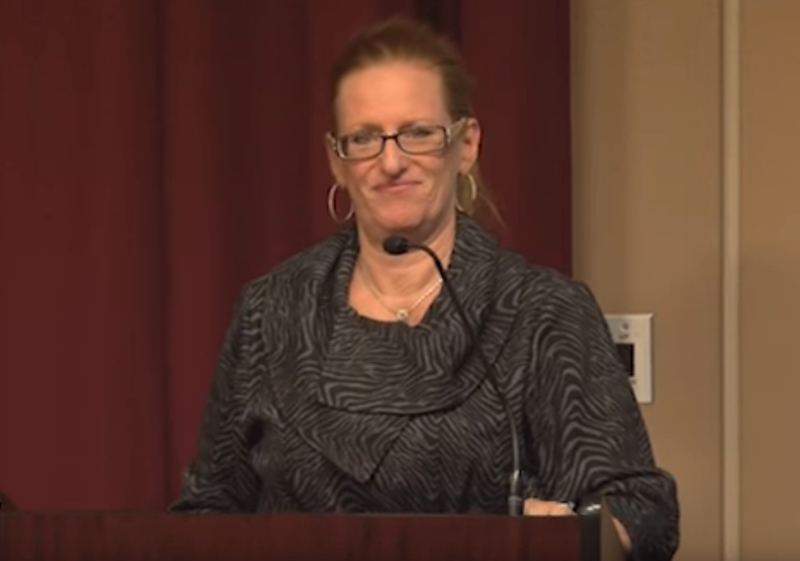
- Marketing Director. Associated with a collection of blurbs for the book that appeared in the press kit.
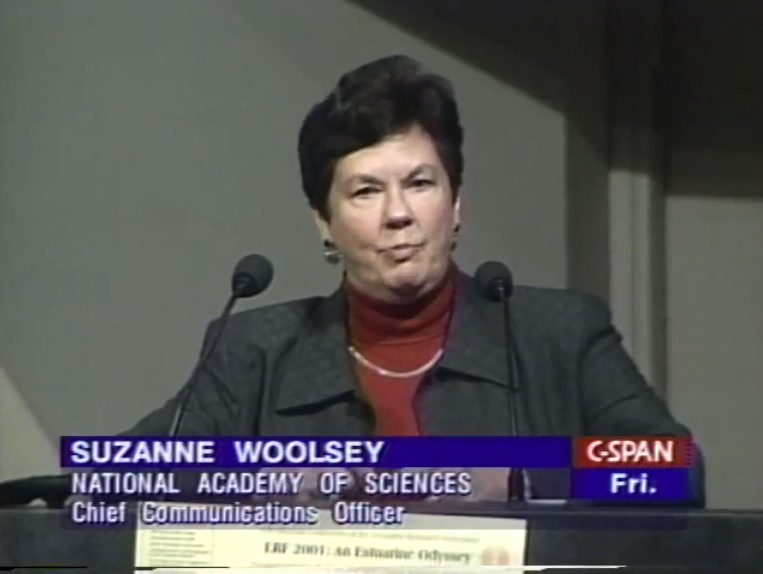
- Chief Communications Officer, National Academy of Sciences. Sent a form letter to anyone who wrote to express concern.
Background
Joseph Henry Press published 112 titles between 1992 and 2008. They are best known for their work promoting sociobiology.
Marketing material
Publisher descriptions (pre-publication + published versions)
Gay, Straight or Lying? Science has the answer [attributed to Robin Pinnel] March 21, 2003
New book on homosexuality, transsexualism and science [attributed to Robin Pinnel] April 2, 2003
- Controversial ideas (PDF) by J. Michael Bailey, December 3, 2002
- Praise (PDF) attributed to Ann Merchant, April 28, 2003
- Timeline of Significant Moments in Transgender History (PDF) by Robin Pinnel, March 26, 2003
Press release (28 April 2003)
Advocate advertisement (10 June 2003)
National Academies Press website (retrieved June 2003)
Stephen Mautner’s open letter
Press release [pdf]
Reviews excerpted for publicity (click authors for more details)
Praise
After I started systematically tracking down the reviews listed in the original Praise (PDF) document, the marketing team started adding others to the book’s webpage as they became available. Most of the praise was written by Bailey’s colleagues. Some wrote more than one review. I tracked down all the authors where possible, listed here as:
Joseph Henry Press credit [Author]
- London Times [Mark Henderson]
- Out Magazine [Duncan Osborne]
- Frontiers [unknown]
- Lavender Magazine [Ethan Boatner]
- Kirkus Reviews [unknown]
- APA Div 44 Newsletter [James Cantor]*
- GLIP News, Australian Psychological Assoc. [Gordon Walker]
- National Review: John Derbyshire
- Choice [unknown]
- Alpha Omega Society [Diane Frank]**
- The Guardian [Steven Pinker]
- Book cover: Steven Pinker (not from Guardian review)
- Book cover: Simon LeVay***
- Book cover: Anne Lawrence
- Book cover: David Buss
- Publisher’s Weekly [unknown]
- iSteve.com: Steve Sailer
- Library Journal [Ina Rimpau]
* James Cantor attribution added upon request of American Psychological Association DIV 44, August 2003
** Quotation removed August 2003
*** Simon LeVay quotation removed July 2003, added back September 2003
Selected letters
See also the following letters to those who oversee Joseph Henry Press from prominent scientists and activists:
- Letter to the National Academies (by Joan Roughgarden, Ph.D., Stanford University)
- Letter to the National Academies (by Barbara Nash, Ph.D., University of Utah)
- Letter to the National Academies (by Monica Casper, Ph.D., Exec. Dir., Intersex Society of N. America.)
- Letters to the National Academies (by Christine Burns, Press for Change UK)
- Letter to the National Academies (by Dallas Denny, M.A.)
Comments
Susan Haack’s essay “Science, Scientism, and Anti-Science in the Age of Preposterism” which was published in the Skeptical Inquirer back in 1997:
http://www.csicop.org/si/9711/preposterism.html
https://skepticalinquirer.org/1997/11/science_scientism_and_anti_science_in_the_age_of_preposterism/
This sheds some light on the academic culture that encouraged the JHP to publish Bailey’s book. Her thesis is basically that as the academic community adopts business values, it starts to judge scholarship by how well it sells rather than how well it answers questions. I think the following quote pretty much exactly describes how TMWWBQ got published:
“It used to be an important role of the academic presses to publish significant books too specialized to be economic. Increasingly, however, as subsidies from their universities have shrunk, university presses seek to publish books they believe will make money. This too is discouraging, to put it mildly, to the investment of effort in difficult problems. Better, from the point of view of making oneself heard, to write the kind of book that might interest a trade publisher, or at least the kind of book that will get reviewed in the non-academic press. And this too, inevitably, favors the simple, startling idea, even, or perhaps especially, the startlingly false or impressively obscure idea. . . .”
Publisher description
2002 pre-publication version
A frank and fascinating look at what science has to tell us about sex and gender identity written by a leading authority on this very complicated subject. Equally important, the book explores some deeply personal and often strikingly poignant stories of femininity, masculinity, and gender confusion.
2003 to present version
Gay. Straight. Or lying. It’s as simple and straightforward as black or white, right? Or is there a gray area, where the definitions of sex and gender become blurred or entirely refocused with the deft and practiced use of a surgeon’s knife? For some, the concept of gender – the very idea we have of ourselves as either male or female beings – is neither simple nor straightforward.
Written by cutting-edge researcher and sex expert J. Michael Bailey, The Man Who Would Be Queen is a frankly controversial, intensely poignant, and boldly forthright book about sex and gender. Based on his original research, Bailey’s book is grounded firmly in science. But as he demonstrates, science doesn’t always deliver predictable or even comfortable answers. Indeed, much of what he has to say will be sure to generate as many questions as it does answers.
Are gay men genuinely more feminine than other men? And do they really prefer to be hairdressers rather than lumberjacks? Are all male transsexuals women trapped in men’s bodies – or are some of them men who are just plain turned on by the idea of becoming a woman? And how much of a role do biology and genetics play in sexual orientation?
But while Bailey’s science is provocative, it is the portraits of the boys and men who struggle with these questions – and often with anger, fear, and hurt feelings – that will move you. You will meet Danny, an eight-year old boy whose favorite game is playing house and who yearns to dress up as a princess for Halloween. And Martin, an expert makeup artist who was plagued by inner turmoil as a youth but is now openly homosexual and has had many men as sex partners. And Kim, a strikingly sexy transsexual who still has a penis and works as a dancer and a call girl for men who like she-males while she awaits sex reassignment surgery.
These and other stories make it clear that there are men – and men who become women – who want only to understand themselves and the society that makes them feel like outsiders. That there are parents, friends, and families that seek answers to confusing and complicated questions. And that there are researchers who hope one day to grasp the very nature of human sexuality. As the striking cover image – a distinctly muscular and obviously male pair of legs posed in a pair of low-heeled pumps – makes clear, the concept of gender, the very idea we have of ourselves as either male or female beings, is neither simple nor straightforward for some.
Resources
Lynn Conway (lynnconway.com)
- Section on Joseph Henry Press and National Academies
Joseph Henry Press (jhpress.org) [archive]
National Academies Press (nap.edu)
- The Man Who Would Be Queen
- Original URL [archive]